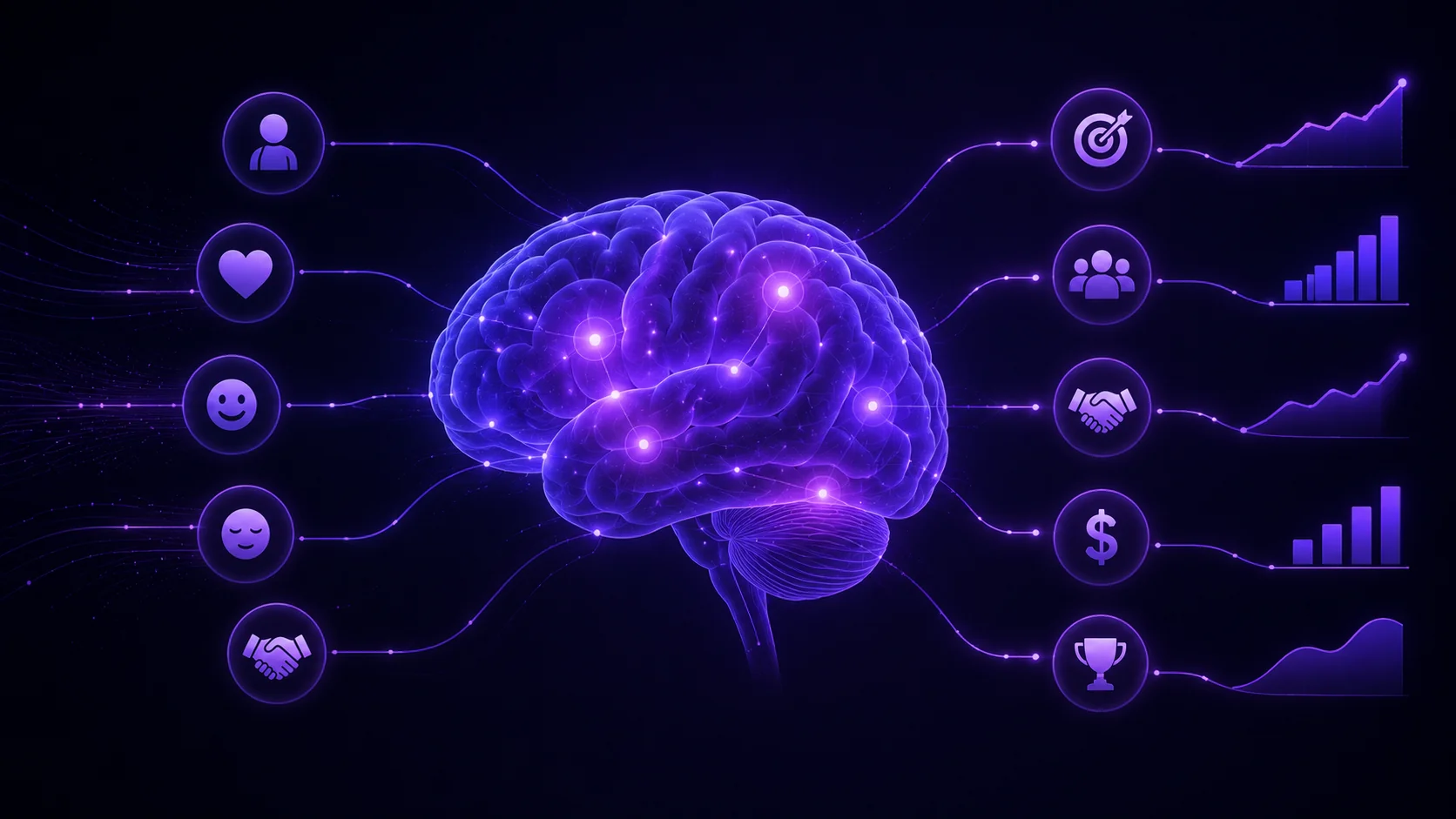
What does research say about emotional intelligence and sales? Most EI training doesn't work. The kind that does looks very different. This article explains what the evidence shows and what it means for sales enablement spending.
The EI research problem: what studies actually measure
Emotional intelligence has a measurement problem. Most EI research uses self-report questionnaires. Tests like the Mayer-Salovey-Caruso Emotional Intelligence Test (MSCEIT) ask people to rate themselves. But self-assessed EI is not the same as real performance under pressure. A rep who thinks they handle objections well may not actually handle them well.
The most useful research for sales training focuses on what can be seen. How does a rep's face look in the first moments of a call? Does their expression build trust or create distance? Ekman and Friesen's FACS framework provides an objective way to measure this. It codes facial movements without relying on self-report.
What FACS research shows about trust formation in sales
FACS studies of sales calls show a clear pattern. Research on thin-slice judgments reveals that buyers decide whether to trust a rep in 10 to 30 seconds. They base this on what they see: face, voice, posture. Product knowledge comes later. First impressions shape how buyers hear everything else.
This matters for sales training. A rep who shows anxiety at the start has already lost ground. Even small signs of doubt — a fleeting defensive expression — can undermine the pitch. But a rep who shows genuine confidence and warmth sets up a positive frame. The right Action Unit patterns make buyers more open to the message.
Why most EI training for sales teams does not work
Most EI training fails for a simple reason. It teaches concepts but doesn't change behaviour. Reps learn about empathy and active listening. They can explain why emotional awareness matters. But they don't learn to stay calm when a buyer pushes back. They can't access confidence under pressure.
Training that works has three parts. First, it must create real emotional pressure — not play-acting. Second, it must give clear, objective feedback. Not "good job" from a manager, but data on what your face actually showed. Third, it requires repetition until the right response becomes automatic. This is how pilots train. It's how surgeons train. See how EchoDepth applies this model using FACS and VAD.
The composure gap: high-EI performers under pressure
The key finding in EI research isn't about general emotional skills. It's about stability under pressure. Top sellers don't just perform well in easy calls. They stay consistent in hard ones. When buyers push back, their performance doesn't drop. When stakes rise, they don't fall apart.
We call this the composure gap. It's the difference between how a rep performs in practice versus a tough real call. EchoDepth's Composure Score measures exactly this. Can you stay steady when the avatar buyer gets hostile? Early data shows this improves fast with practice. It also predicts which reps close more deals.
What this means for sales enablement investment
The research points to a clear conclusion. Emotional intelligence isn't a fixed trait. It's a skill you can train. Some reps have it naturally. Others can learn it. The key is how you train: lectures don't work. Practice with feedback does.
The ROI case is simple. A rep who improves composure in 3-5 sessions will close more deals. They won't fold when buyers push back on price. They won't lose confidence when objections come up. Those moments decide deals. Read more on measuring coaching ROI →
FAQs
What does research say about emotional intelligence in sales?
Train emotional presence — not just concepts.
Request access to the EchoDepth for Sales early access programme.
Request Access