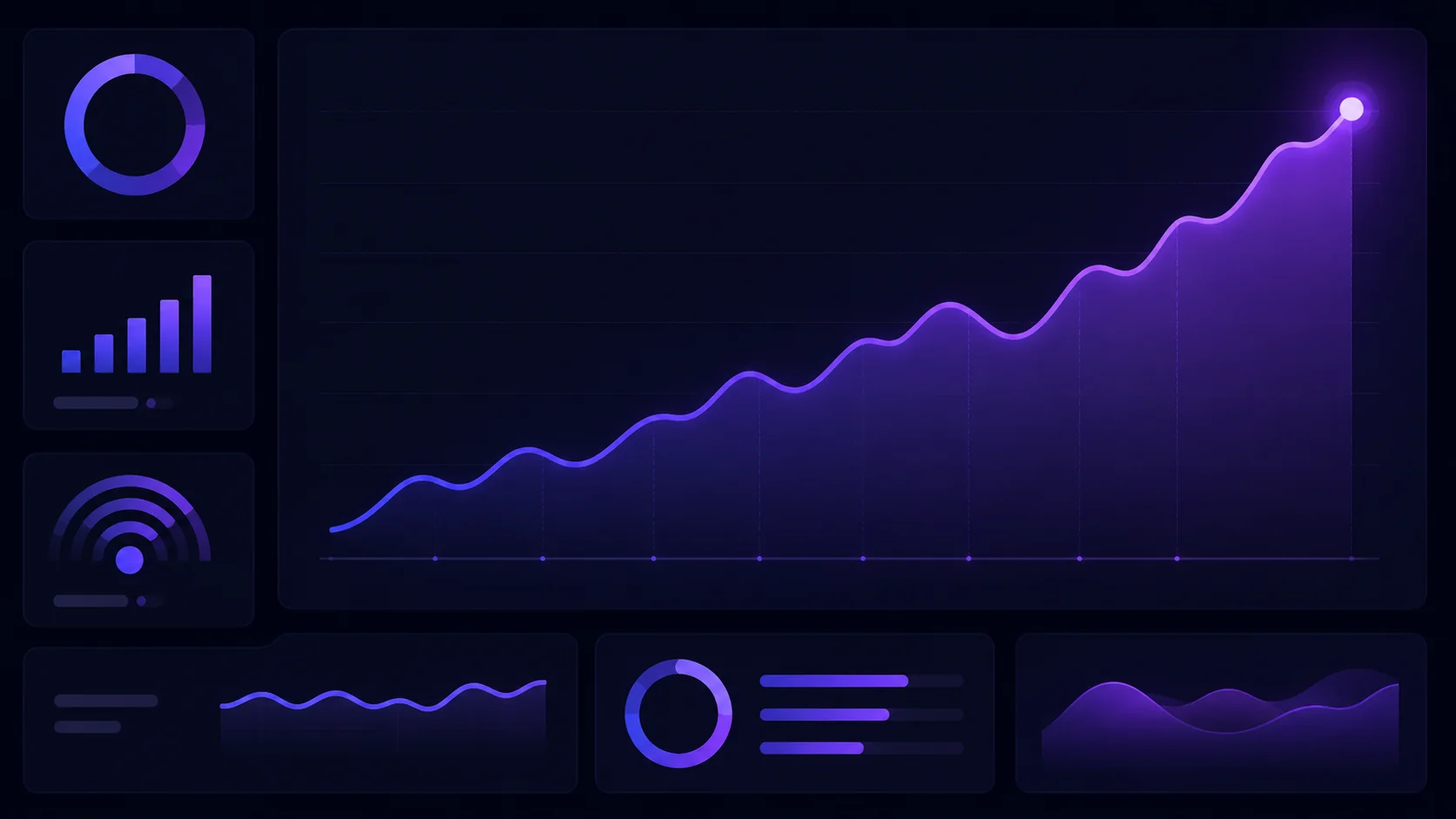
Sales enablement teams struggle to prove coaching ROI. Quota and win rate come too late. Too many factors cloud the picture. EchoDepth's emotional data gives you a leading indicator. It links training to the skill that drives sales: presence.
The problem with traditional ROI measurement
Most ROI studies link training to quota or win rate. Two problems: First, those numbers depend on market, territory, and product — not just coaching. Second, they lag. Results show up 3-6 months later. You can't prove what caused what.
Teams claim value they can't prove. That's why coaching budgets get cut first. A leading indicator fixes this.
Emotional performance as a leading indicator
EchoDepth measures what drives buyer decisions: emotional presence. Confidence, Warmth, and Authority are not guesses. They track the signals buyers read in real time. Better scores mean better sales mechanics. No external noise.
This lets teams prove ROI before pipeline data arrives. If Composure rises 18 points across 20 reps after 4 sessions, that is a clear coaching win. See how EchoDepth technology works.
What early cohort data shows
Early data shows three patterns. First: faster ramp. New hires hit benchmarks 40% sooner (32 reps, Q1 2026). Second: quick gains. Most improve in 3-5 sessions. Composure shows the clearest signal. Third: consistency. Score variance drops after 6 weeks. The team gets tighter.
Building your ROI case
Run a pilot with 10-15 reps. Track three things: score change from session 1 to 5, manager confidence at 4 and 8 weeks, and time-to-first-opportunity vs the last cohort.
You get a leading indicator (scores), a qualitative signal (manager view), and a lagging metric (ramp time). Together they prove the case. Talk to us about a pilot.
FAQs
How do you measure sales coaching ROI?
Train your team's emotional presence.
Request access to the EchoDepth for Sales early access programme.
Request Access